
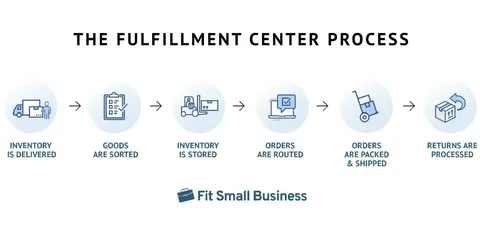
Retail Fulfillment vs. Direct-to-Consumer (DTC) Fulfillment: Key Differences.
Have you ever ordered a custom pairs of shoes online, only to have them arrive on your doorstep less than 48 hours later in a beautifully branded box? Now, contrast that with the massive, pallet-sized shipments rolling off freight trucks at your local Target or Walmart.
While the end goal for both scenarios is exactly the same—getting products into the hands of consumers—the logistics machine running behind the scenes looks entirely different. For modern brands, deciding how to move inventory can feel like a high-stakes puzzle. Choosing between retail fulfillment and Direct-to-Consumer (DTC) fulfillment isn't just a logistical choice; it completely reshapes your operations, margins, and tech stack. Many growing businesses turn to experienced 3pl companies to handle these complex channels, especially when balancing traditional retail orders with fast-paced online sales.
Let's dive into the core differences between these two fulfillment models so you can decide which strategy aligns best with your business goals.
What is Retail Fulfillment?
Retail fulfillment, often referred to as business-to-business (B2B) logistics, involves shipping large volumes of inventory to physical retail stores, wholesalers, or massive distribution centers.
Think of this model as a game of bulk efficiency. Instead of packing individual items for single customers, your warehouse team is prepping massive pallets, routing freight trucks, and adhering to incredibly strict vendor compliance guidelines.
If you are selling to major big-box retailers, you will quickly realize they don't tolerate mistakes. Retailers utilize strict routing guides that dictate exactly how boxes must be labeled, stacked, and scheduled for delivery. A single misplaced barcode or a delivery that is twenty minutes late can result in costly chargebacks and fees that eat right into your profit margins.
What is Direct-to-Consumer (DTC) Fulfillment?
On the flip side, DTC fulfillment is all about the individual customer experience. In this model, a buyer purchases an item directly from your e-commerce store, and your fulfillment center picks, packs, and ships that specific order straight to their front door.
+-------------------------------------------------------------+
|                     THE LOGISTICS SPLIT                     |
+-------------------------------------------------------------+
|  RETAIL FULFILLMENT         |  DTC FULFILLMENT              |
|  - B2B (Bulk shipments)     |  - B2C (Individual parcels)   |
|  - Pallets & Freight        |  - Boxes & Mailers            |
|  - Strict compliance rules  |  - Unboxing experience focus  |
|  - Predictable schedules    |  - High order volume spikes   |
+-------------------------------------------------------------+
DTC logistics requires an incredible amount of agility. You aren't shipping 500 units of the same sweater to one warehouse; you are shipping 500 individual sweaters to 500 different addresses across the country.
Because you are interacting directly with the end user, the packaging matters just as much as the product inside. This is where customized mailers, personalized thank-you notes, and tissue paper come into play. It is your primary touchpoint to build brand loyalty, but it also requires a warehouse flow designed for rapid, single-item picking.
Key Differences Between Retail and DTC Fulfillment
To choose the right path for your brand, it helps to look at how these two models stack up across a few critical operational categories.
1. Order Volume and Shipping Methods
The most obvious variance lies in the scale of the shipments. Retail fulfillment relies heavily on Less-Than-Truckload (LTL) or Full Truckload (FTL) freight shipping. Your inventory moves on standardized pallets, and success is measured by freight efficiency.
DTC fulfillment relies almost entirely on parcel carriers like UPS, FedEx, and DHL. Instead of pallets, your team manages hundreds of individual tracking numbers daily.
2. Inventory Management and Technology
Managing your stock levels requires a completely different approach depending on your sales channels. For instance, brands utilizing retail fulfillment often have to sync their systems with complex Electronic Data Interchange (EDI) software to process retail purchase orders.
Meanwhile, if you sell on major digital marketplaces alongside your own site, amazon inventory management becomes an absolute priority. Keeping your stock levels synced across Amazon FBA, your Shopify store, and your physical warehouse requires robust multi-channel inventory software. If your digital inventory levels lag, you risk overselling, accumulating backorders, and damaging your seller ratings.
3. The Customer Experience and Packaging
In retail fulfillment, the customer is a corporate buyer. They do not care about pretty tissue paper; they care about speed, barcode readability, and structural integrity.
With DTC, the unboxing experience is a powerful marketing tool. Statistics show that roughly 40% of consumers are more likely to make a repeat purchase from a merchant that delivers orders in premium packaging [source needed].
Navigating the Challenges of Both Worlds
Can a business successfully execute both strategies simultaneously? Absolutely. In fact, many omnichannel brands do just that to maximize their market reach. However, trying to run both operations out of the same warehouse without clear segmentation can quickly lead to operational chaos.
Imagine a sudden viral TikTok video causes a massive spike in your DTC website orders on the exact same morning your largest retail partner submits a purchase order for three full freight truckloads. If your warehouse lacks designated zones for pallet picking and individual parcel packing, your team will face immediate bottlenecks.
This operational strain is precisely why many scaling brands hand off their logistics to specialized 3pl companies. A qualified third-party logistics partner possesses the infrastructure, specialized warehouse management software (WMS), and carrier relationships required to handle both freight routing and rapid parcel sorting under one roof.
       [ Omnichannel Brand Inventory ]
                     |
         +-----------+-----------+
         |                       |
         v                       v
 [ B2B Retail Channel ]  [ DTC E-Commerce Channel ]
         |                       |
  (Pallets & Freight)     (Individual Parcels)
         |                       |
         v                       v
[ Retail Distribution ]  [ Customer Doorstep ]
Which Fulfillment Strategy Fits Your Brand?
As you evaluate your logistical future, ask yourself these three critical questions:
What are your current growth goals—are you looking to scale via volume in physical storefronts, or do you want to own the direct customer relationship online?
Does your current team have the technical capability to manage multi-channel systems like amazon inventory management alongside traditional retail EDI routing?
What do your profit margins look like when you factor in the high cost of individual parcel shipping versus the wholesale discounts required by major retailers?
If you want absolute control over your brand image, data collection, and customer relationships, doubling down on DTC is your best bet. If you want to move massive amounts of inventory quickly and build widespread brand awareness through physical footprint, retail fulfillment is the way to go.
Finding the Perfect Balance
Ultimately, choosing between retail fulfillment and DTC fulfillment doesn't have to be an all-or-nothing decision. Many of the most successful modern brands successfully utilize a hybrid approach to capture the best of both worlds.
By understanding the distinct demands of B2B compliance and the fast-paced nature of B2C parcel shipping, you can build a resilient supply chain that satisfies both corporate retail buyers and everyday online shoppers. Partnering with experienced 3pl companies and leveraging smart inventory tracking tools can take the guesswork out of the equation, leaving you free to focus on building your brand and creating products your customers love.
What is the biggest hurdle your business faces when trying to balance retail orders with online sales? Drop your thoughts in the comments below, or reach out to our logistics experts today to map out a custom fulfillment plan tailored to your business growth.


0 Comments